School of Systems
What is the
School of Systems?
In 2021, the book Flexible Visual Systems was published. On the back cover of the first version, we displayed a nondescript diagram of a curriculum, the curriculum for a school of systems. In 2026, five years and six editions later, we are making it a reality. The School of Systems will start small, but it has big ambitions.
Starting with offering you exciting courses taught by the best design educators worldwide, we will go beyond traditional design education, opening professional pathways across all areas of system design.
- You can sign up for our mailing list to keep informed about our next steps.
- If you have any questions that are not covered by the information on this website, please don’t hesitate to reach out to me.
Sign up for our
School of Systems mailing list
and keep informed about our next steps.
Our Teachers:
Coordination
The School of Systems is a (very) small group of people who deeply care about education as a result of social interaction. We are not a big corporation with no face, and we do not offer pre-recorded material to make you study in isolation. We are building learning communities around system design. If you have any questions that our FAQ does not answer, do not hesitate to contact our lovely Franziska: franziska(at)schoolofsystems.org
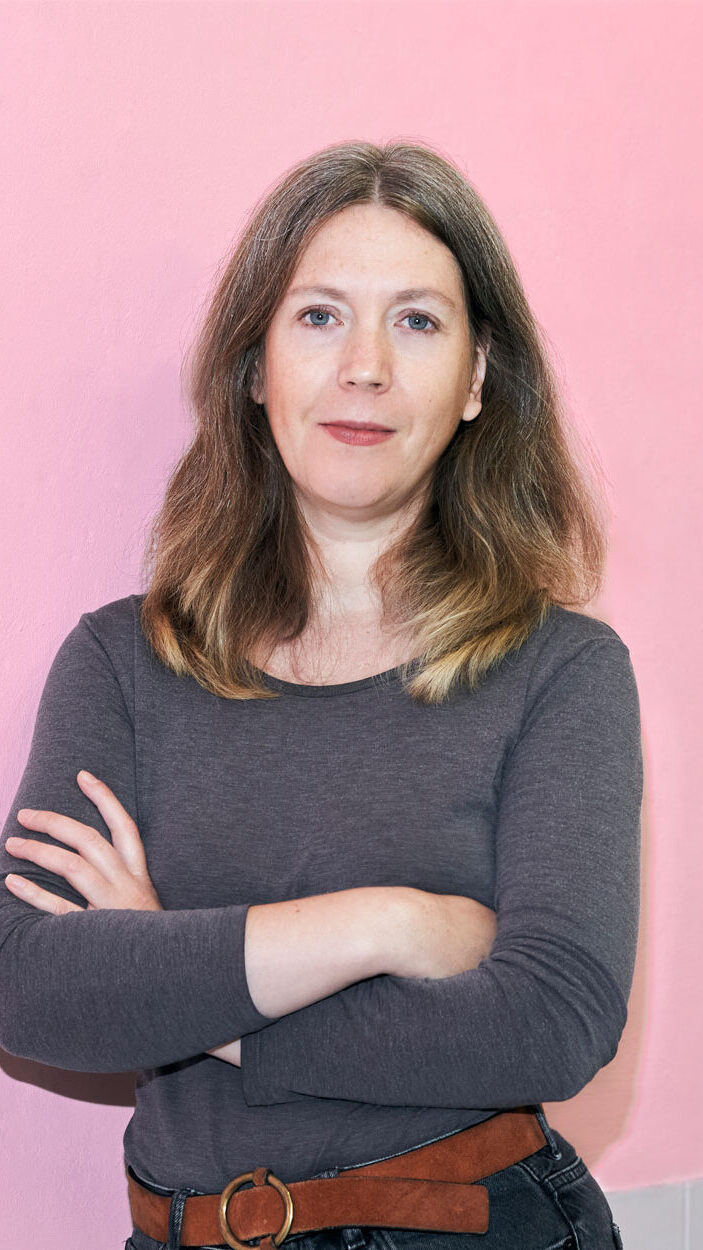
Franziska’s deep curiosity for how people connect and create meaning together led her to bring people together. With stations at Fontshop, Monotype, and Adobe, she worked at the intersection of visual design, community, and creative technology.
Academic Direction
Martin is the grandson, son, and nephew of teachers. His escape plan from this family tradition was to become a graphic designer. He was only partly successful. While founding the design Studio TwoPoints.Net with Lupi Asensio and raising two boys, he wrote a doctoral dissertation on systems in design, which led to the longseller Flexible Visual Systems, translated into English, Spanish, and Japanese. Martin became a teacher in 2003. He has taught at dozens of European Universities since then. You can contact Martin at: martin(at)schoolofsystems.org
Founding the School of Systems is a dream coming true. Martin already fantasised about the curriculum of a design school based on a systemic lens on the world when working on his doctoral thesis. This may sound very ambitious, and it is, but it is early days, and we will give the School of Systems enough time to emerge.

What is the School of Systems?
The School of Systems is a learning platform for designers, creatives, and professionals interested in understanding and applying systems thinking in design. We offer live courses and workshops that combine practical exercises, real-world examples, and opportunities to connect and grow with a creative community.
Why should I join a course?
To learn practical design and systems-thinking skills from experienced instructors.
To receive direct feedback on your work and develop your skills effectively.
To connect with a community of like-minded creatives and find inspiration.
To practice on real projects and apply your knowledge beyond theory.
To structure your creative practice and stay motivated.
Who are the courses for?
Our courses are designed for designers, creative professionals, and anyone interested in learning about design and business systems, whether you are a beginner or experienced practitioner.
How long are the courses?
Workshops are two days and courses run for 6 weeks, with one live session per week. Each session lasts 2–2.5 hours and includes input from the instructor as well as practical exercises.
What languages are the courses taught in?
All courses are taught in English.
How many participants are there per session?
Sessions typically have 15–20 participants to ensure meaningful interaction and personalized feedback.
What do I need to participate (tech, software, camera, microphone)?
You need a computer with a stable internet connection, a webcam, a microphone, and the software required for the course (details are provided before the session). And pen and paper!
Which platforms do you use for live sessions and the course?
We primarily Google Meet for live sessions. All course materials and resources are hosted on Google.
What happens if I can’t attend a scheduled session?
Workshops and courses are designed to be live and interactive, so recordings are generally not available. If you cannot attend a session, please inform us in advance, and we can discuss possible alternatives on a case-by-case basis.
Can I ask questions or get feedback on my work during the course?
Absolutely. Courses are interactive, and instructors provide feedback on exercises and projects during the live sessions. In some courses, participants also have the opportunity to post exercises and projects in the course community to receive additional feedback.
Is there supporting material or assignments between sessions?
Yes, courses include assignments, exercises, and reading materials to reinforce learning between sessions.
Can I connect with other participants?
Yes, we encourage networking and provide channels for communication, discussion, and collaboration.
Can I stay in touch or collaborate on projects after the course?
Yes, participants are welcome to continue engaging with the community and collaborate on projects beyond the course.
Will I receive an invoice?
Yes, invoices are provided for all course payments.
Will I receive a certificate of completion?
Not at the moment, but we may consider offering certificates in the future.